If you ask most students when they should start preparing for investment banking recruiting, they say “junior year.” The reality is that if you are waiting until junior year to begin, you are already behind. The investment banking recruiting timeline has compressed dramatically over the past decade, and the students who land offers at bulge brackets and elite boutiques today typically start building their foundation in their freshman or sophomore year. This guide lays out the complete timeline from your first year of college through offer day so you know exactly what to do and when. You can also check out our dedicated recruiting timeline resource for a visual overview.
Table of Contents
ToggleWhy the Recruiting Timeline Has Compressed
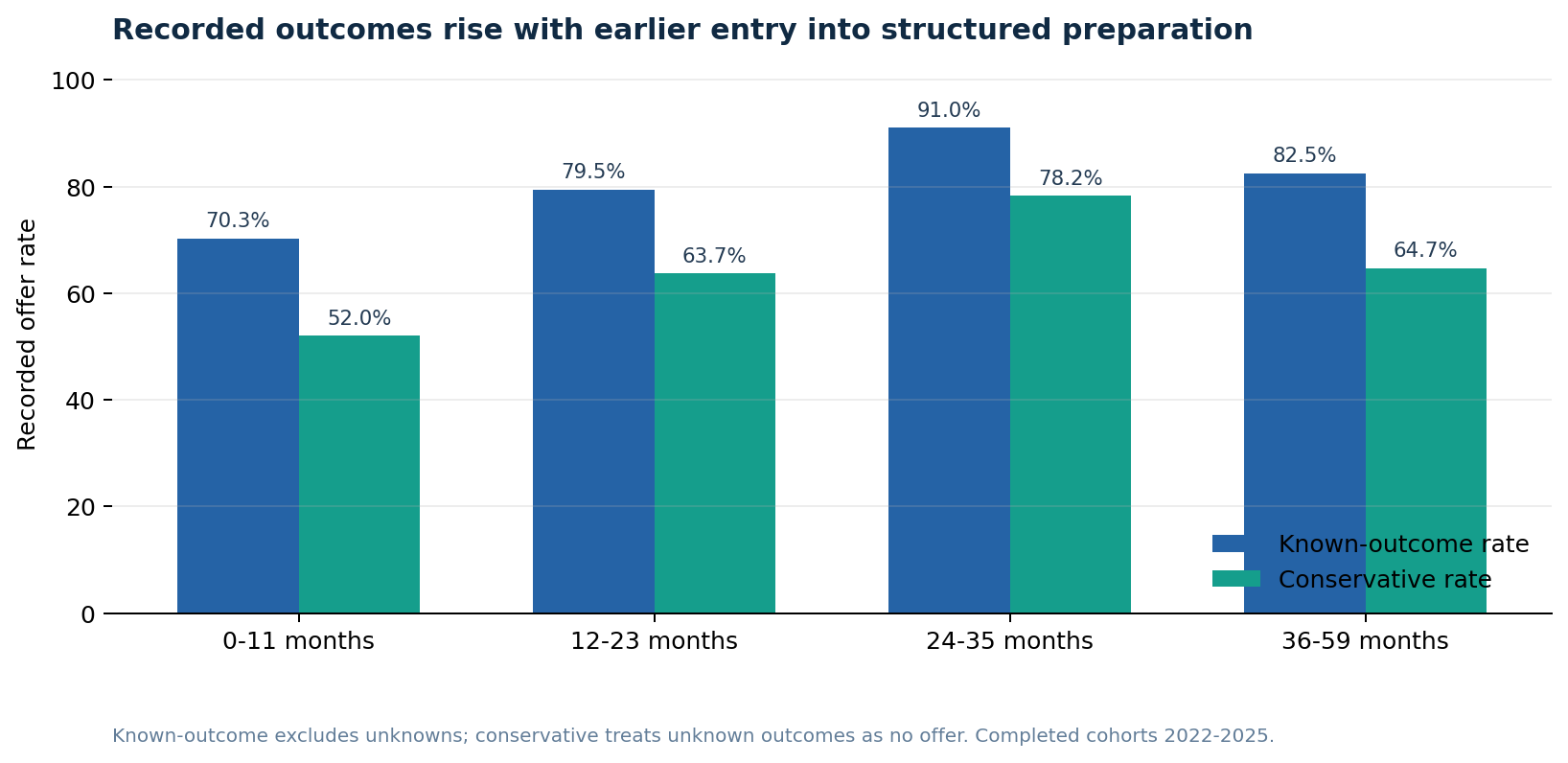
A decade ago, banks recruited in the fall of junior year for summer internships starting the following June. Today, many banks, particularly bulge brackets, begin reaching out to students for “sophomore summer” programs and early insight programs starting in the spring of freshman year. By the time formal summer analyst recruiting kicks off in the fall of sophomore year, banks have already identified many of their preferred candidates through these earlier touchpoints.
The result is a recruiting cycle that rewards students who start early and penalizes those who wait. Understanding this compressed timeline is the first step to navigating it successfully.
Freshman Year: Build Your Foundation (September to May)
Most freshmen are not thinking about investment banking recruiting, which is exactly why starting now gives you a meaningful advantage.
Fall Semester, Freshman Year
Your priorities in the fall of freshman year should be:
- Academics: Protect your GPA early. A strong first semester signals academic ability and is much easier to achieve before the social and extracurricular pulls of sophomore year. Banks care about GPA: we cover the specifics in our WSMM blog, but a 3.5+ is the baseline at most schools.
- Finance clubs: Join your school’s investment banking, private equity, or finance clubs. These organizations are the primary on-campus pipeline for banking internships and provide access to alumni networks, case competition experience, and upperclassman mentorship.
- LinkedIn profile: Create a professional LinkedIn profile. Bankers will look you up before and after coffee chats.
- Basic finance knowledge: Start learning the basics (financial statements, valuation concepts, how markets work). Our Free Course is a good starting point, and our Free Resources page has additional materials.
Spring Semester, Freshman Year
- Freshman banking programs: Many banks offer freshman-specific programs: insight days, diversity programs, and early exposure initiatives. Goldman Sachs, Morgan Stanley, JP Morgan, and others all run programs specifically for freshmen. Applications typically open in January or February. Apply to everything you are eligible for.
- Coffee chats: Begin reaching out to sophomore and junior students at your school who are in banking programs or internships. These peer conversations are less formal and more accessible than reaching out to full-time bankers, and the information is often more candid and relevant.
- Resume building: Start building a resume that banks will want to see. Even as a freshman, clubs, relevant coursework, and part-time finance-adjacent roles make a difference. Use our Resume Template to format it correctly from the start.
Sophomore Year: This Is the Critical Year (September to April)
Sophomore year is when formal recruiting for the primary investment banking summer analyst internship begins. This is the make-or-break year of the recruiting process for most students.
September to December, Sophomore Year: Recruiting Kicks Off
This is when recruiting for the junior summer internship kicks off. Applications open, early-moving banks start interviewing, and networking is at its peak. Banks expect you to arrive with relationships already built, which is why the spring and summer after freshman year matter so much.
- Coffee chats with analysts and associates: Aim for 2 to 4 coffee chats per week during September and October. These conversations build relationships, clarify your understanding of the bank and group, and, critically, result in internal referrals that dramatically improve your odds of getting an interview.
- On-campus recruiting events: Attend every information session, networking event, and panel your school’s career office organizes. These are the easiest opportunities to make a personal impression on recruiters and bankers.
- Informational interview tracking: Keep a spreadsheet of every banker you have spoken to, what you discussed, and when to follow up. This database becomes invaluable during application season. Our Networking Guide covers how to run this process systematically.
Fall of Sophomore Year: Applications Open
Most major banks open their summer analyst applications in the fall of sophomore year, more than a year before the internship starts. This is when the formal recruiting process begins, but by this point you should already have relationships built.
- Apply immediately when applications open: Do not wait. Banks review applications on a rolling basis, and early applicants have an advantage. Set calendar reminders for every bank’s application opening date.
- Tailor your resume and cover letter: Use the bank-specific knowledge you gathered during coffee chats to customize each application. Generic applications are easy to spot and easy to reject.
- HireVue and video interviews: Many banks use asynchronous video interview platforms as a first screen. Practice your answers on camera before you submit (your first take is rarely your best).
Through Sophomore Year: First Rounds and Superdays
First-round interviews start in sophomore fall at early-moving banks and continue through the year. Superdays follow, with offers typically extended within a few days to a few weeks after each superday.
- Technical preparation: This is when you need to be fully prepared on valuation methodologies, accounting concepts, and M&A/LBO basics. Download and memorize our Technical Cheatsheet.
- Behavioral preparation: Prepare polished, structured answers to the top 10 behavioral questions. Practice them out loud repeatedly.
- Mock interviews: Do as many mock interviews as possible with people who can give you real, critical feedback, not just friends who will tell you that you did great.
Junior Year: If You Missed the Sophomore Cycle
If you did not land a junior summer offer during the sophomore cycle, you are not out of the running, but the path is more challenging. In junior year, the openings come from middle-market banks, boutiques, off-cycle roles, and later full-time recruiting, and that is where students at non-target schools and those who discovered banking later often break in.
What Changes in Junior Year
- Most bulge bracket and elite boutique summer classes were already filled during the sophomore cycle.
- Middle-market banks, boutiques, and off-cycle internships hold most of the remaining spots.
- Many top banks will already have filled a portion of their class from internal conversions and early programs, so the pool of available spots may be smaller.
- Your prior internship experience (if in a related field) becomes an important differentiator.
The networking and application strategy is the same: start early, network aggressively, and prepare technically. The timeline is compressed into a tighter window, which makes having a strong technical foundation even more important from day one.
Full-Time Recruiting: The Fall of Senior Year
For students who have completed a summer analyst internship and not received a return offer, or who are entering recruiting for the first time as seniors, full-time analyst recruiting happens in the fall of senior year, typically September through November.
Full-time recruiting is more competitive per spot because the number of full-time hires is smaller than the summer analyst class (many spots are filled by returning interns). However, banks do hire meaningful numbers of full-time analysts directly each year, particularly in strong hiring environments.
Key Milestones You Cannot Miss
Regardless of where you are in the timeline, here are the non-negotiable milestones to protect:
GPA Checkpoints
Most banks use a GPA screen at the resume review stage. The typical threshold is 3.5+ at target schools and 3.7+ at non-target schools (where you need to compensate in other ways). Letting your GPA slip early is very difficult to recover from. Take this seriously before the damage is done.
Networking Before Applications Open
The single most common mistake students make is waiting until applications are open to start networking. By then, it is too late to build meaningful relationships. Your goal is to have spoken with at least 5 to 10 bankers at each target bank before you submit a single application.
Technical Preparation Before First Rounds
Banks will test you on valuation, accounting, and M&A concepts in the first round. You need to be fully prepared (not mostly prepared) before your first interview. There is no second chance once a banker has formed an impression that you do not know the material.
Applying on Day 1
When applications open, apply immediately. Do not plan to “get to it this weekend.” Banks review and conduct first-round screens on a rolling basis, and early applicants get an outsized share of interview slots.
Non-Target School Students: Starting Even Earlier
If you attend a non-target school (meaning your school does not have on-campus recruiting from top banks), your timeline needs to shift even earlier. You are competing with students at targets who have built-in advantages: on-campus recruiters, alumni databases, and clubs that do direct outreach to banks on students’ behalf.
To overcome the non-target disadvantage, you need to:
- Start networking in the fall of freshman year, not sophomore year
- Build a stronger resume (higher GPA, more relevant internships, more club leadership)
- Network more aggressively: more coffee chats, more follow-ups, more persistence
- Consider a freshman or sophomore summer internship at a regional bank or boutique to build your resume before recruiting kicks off in sophomore fall
We have coached many non-target students into top banks: check out our student interviews and track record for examples of students who overcame non-target disadvantages through strategic preparation.
Want Personalized Interview Coaching?
The investment banking recruiting timeline is unforgiving: miss a key window and you may not get another shot until the next cycle. At Wall Street Mastermind, we help students build a recruiting plan customized to their specific situation: their school, their year, their GPA, and their target banks.
If you want a clear roadmap and hands-on coaching to execute it, apply to work with us here. See our Program Overview for details on what the coaching engagement covers, and read what past students say on Trustpilot.