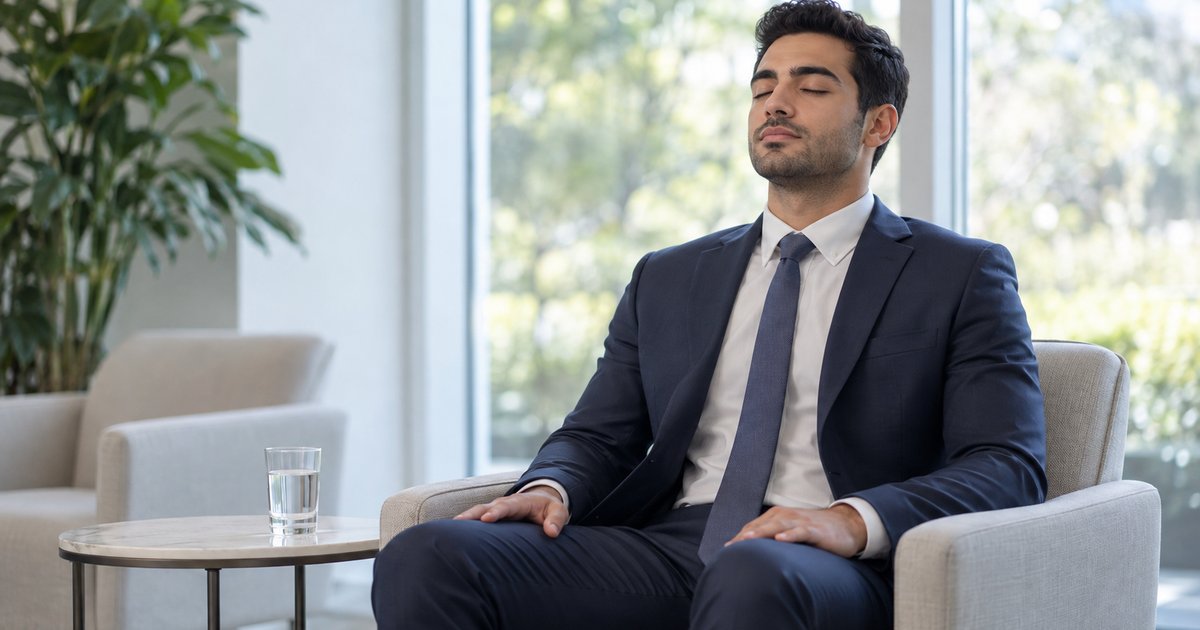
A superday is the final round of many banking recruiting processes, with several interviews on one day. The format varies by firm, but a common version has candidates rotate through a series of conversations, each lasting about half an hour, with different bankers in each room.
The best way to prepare is to picture the day before it happens. The day below follows a hypothetical candidate, Maya, a sophomore interviewing for a junior-summer analyst role at an imaginary mid-sized advisory firm. Everything here is invented for teaching. Real superdays will differ, so use it as a model for pacing and topics, not as a script.
Table of Contents
ToggleBefore the First Door Opens
Maya arrives early, checks in and meets a few other candidates in a waiting area. A recruiter explains the schedule: four interviews with four different people, with short breaks between them. Candidates will be told who they are meeting only shortly beforehand.
Maya has done three things in advance.
- Rehearsed her story and prepared three or four examples that can answer many behavioral questions.
- Reviewed technical basics, including accounting flows, valuation methods and the main steps of a leveraged buyout.
- Written a one-page profile of the firm, with the group she is interviewing for and two recent public deals.
She also brought a few printed copies of her resume, a notebook with a pen and a bottle of water, and she dressed in a way that felt professional and comfortable. Small logistics like these save mental energy for the conversations that matter.
In the waiting area she keeps conversation friendly and avoids comparing notes. She silences her phone, sips water and breathes slowly. Our superday overview explains what to expect on the day.
Interview One: A Junior Banker and the Resume
The first interview is with an associate, a few years out of school. These conversations tend to be friendly and focused on fit, because junior bankers often decide who they want to work next to.
Typical topics:
- “Walk me through your resume.”
- “Why investment banking?”
- “Why our firm?”
- A few questions about a project or job listed on the resume.
What Maya does well. She gives her “tell me about yourself” answer in about ninety seconds, ending with a line connecting her experience to the group. Our guide to answering tell me about yourself walks through that structure. When asked about a campus finance club, she gives a specific example with a result.
Pacing. She aims to keep each answer under two minutes. When the interviewer smiles and nods, she stops talking and lets them respond.
Energy. This is the easiest interview, and the temptation is to burn too much energy. Maya stays calm and warm, and saves her best focus for later.
At the end she asks a question about the associate’s own experience: “What surprised you most when you joined the group?” The associate talks for a few minutes, which gives Maya a chance to reset.
Interview Two: A Vice President and the Technicals
The second conversation is with a vice president who spends most of the time on technical questions. The tone is more direct. The interviewer sets a quick rhythm, with one question after another.
Typical topics:
- “Walk me through the three financial statements.”
- “If depreciation goes up by 10, what happens to net income and cash?”
- “Walk me through a DCF.”
- “How do you get from enterprise value to equity value?”
What Maya does well. She restates the question, says her assumptions aloud and works through each step. When she gets the DCF walkthrough, she follows the structure in our DCF walk-through guide. On the depreciation question she makes a small slip, saying net income falls by the full amount, then catches it: “Let me correct that. Taxes also fall, so the net income decline is smaller.” The interviewer nods.
Pacing. The VP is moving fast. Maya matches the speed without rushing. Short, structured answers keep her on track.
Energy. Technicals are draining. She takes a slow breath before each answer, which buys a second to think.
Break and Reset
After the second interview there is a break. Maya uses the same five-minute routine.
- She lets go of the depreciation slip. It is done, and she corrected it well.
- She stands and walks, then drinks water.
- She writes a one-line note on each interviewer.
- She reads her firm profile once, then puts it away.
The break matters because the third interview is longer and more open-ended.
Interview Three: A Managing Director and the Big Picture
The third interview is with a senior banker who leads the group. These conversations often have fewer technical questions and more about judgment, curiosity and communication. The interviewer may start with something simple and then move wherever the conversation goes.
Typical topics:
- “What’s going on in the markets that interests you?”
- “Tell me about a deal you have followed.”
- “Where do you see yourself in a few years?”
- A question about a time Maya handled disagreement on a team.
What Maya does well. She describes a recent public transaction in plain English, explaining why the buyer wanted the target and what could make the deal difficult. She sticks to what was reported and says “I am not sure about that detail” when she is unsure. On the disagreement question, she uses a short story with a clear situation, her action and the result.
Pacing. The interviewer talks more here, so Maya listens carefully and builds on what they say. She gives answers of about one to two minutes and lets the conversation breathe.
Energy. Senior bankers can care as much about poise and presence as about precision. Maya sits up, makes eye contact and keeps her voice steady.
Interview Four: Mixed Questions at the End
The last conversation is with a senior analyst or associate. It is the fourth in a row, and fatigue is visible. This interview often mixes behavioral and technical questions and may include a short exercise.
Typical topics:
- A quick technical question or two, sometimes repeating earlier topics.
- A paper LBO or a simple numbers exercise.
- “Is there anything you’d like to add?”
- An open invitation to ask questions.
What Maya does well. She treats the interviewer as the first person she has met that day. When asked “tell me about yourself” again, she gives the same core story but opens with a different detail. On the numbers exercise, she talks through her steps and double-checks the arithmetic.
Pacing. She keeps answers shorter than before and pauses before technical responses.
Energy. She knows this is the hardest stretch, so she sits up, smiles and asks a thoughtful closing question about how analysts are trained. If you want to hear what the day can feel like in more detail, see our guide to what to expect at a superday.
What the Day Teaches
Looking back at the four conversations, a few patterns stand out.
- Each interview has a different job. The first tests fit, the second tests technical skills, the third tests judgment and presence, and the fourth tests consistency.
- Mistakes are survivable. Maya slipped on one technical answer and recovered. Recovery is often viewed as a strength.
- Structure keeps you steady. A clear format for each answer, such as situation, action and result for stories, reduces the chance of rambling.
- Energy is a plan. Maya resets between rooms, keeps water nearby and varies her examples.
- Questions matter. Each time she asked a different, specific question, the conversation became warmer.
What Maya could improve
No performance is perfect, and honest review is part of preparing. After the day, Maya notes a few things for next time.
- She spoke a little fast in the second interview and could slow her opening sentences.
- In the third interview, she could have asked one more follow-up about the group’s recent work.
- She forgot to mention one example from her summer job that fit a question about initiative.
- She did not eat much at the break and felt hungry by the fourth interview.
None of these is serious. Writing them down the same evening turns each one into a specific fix for the next mock or the next round.
To practice, set up a full-length mock with four different people if you can, each with a different style. Our mock interview guide can help you set up that session.
Key Takeaways
- A superday often includes four conversations with different people, each with a slightly different focus.
- Expect fit questions first, technicals from a mid-level banker, big-picture questions from a senior one and a mix at the end.
- Pace your answers: short and structured for technicals, longer and more conversational for senior bankers.
- Reset between interviews, vary your examples and treat each interviewer as the first of the day.
- Practice a full-length mock at least once, so the fourth conversation feels familiar.
Want Personalized Interview Coaching?
If you are serious about breaking into investment banking, the best thing you can do is work with someone who has been through the recruiting process and knows what top banks look for. At Wall Street Mastermind, we have coached over 2,500 students through recruiting at bulge bracket banks, elite boutiques, and middle market firms. Book a free strategy call to learn how we can help you prepare.
Related Articles
- Investment Banking Superday: How to Prepare and What to Expect
- Investment Banking Superday: What to Expect and How to Prepare
- Mock Investment Banking Interview: 20 Common Questions With Model Answers
- Tell Me About Yourself: How to Nail This Investment Banking Interview Question
- Walk Me Through a DCF: How to Nail This Investment Banking Interview Question
Follow Wall Street Mastermind
Stay up to date with the latest investment banking recruiting tips, technical guides, and career advice:
- YouTube
- TikTok
- X (Twitter)
- Podcast: Apple Podcasts | Spotify | SoundCloud